How to Save Money on Your Next Trip Best Guide
"The best way to save money is to decide what you are actually willing to spend before you leave your house."
Planning a trip requires a balance between seeing everything and staying within a realistic budget. This guide covers how to use digital tools for navigation, manage currency fluctuations, and define your travel purpose to ensure every dollar spent provides maximum value.
* Master digital navigation to prevent costly transit errors. * Use modern travel cards to minimize exchange fees and security risks. * Define your travel goals to prioritize spending. * Learn how to balance preparation with spontaneity.

How can digital tools prevent budget leaks?
The sun was beating down on a street corner in downtown Chicago, and I stood there staring at a phone screen that refused to load a map. I had spent twenty minutes wandering in circles, eventually having to call an expensive rideshare just to get back to my hotel.
According to the United Nations Interim Administration Mission in Kosovo, a non-convention travel document was issued to residents between 2000 and 2008 to facilitate foreign travel.
According to the United Nations World Tourism Organization, global international tourist arrivals might have decreased by 58% to 78% in 2020.
Using digital tools effectively is the most cost-effective way to prepare for any trip. You should familiarize yourself with apps like Google Maps or specialized transit apps before you depart, and always download offline maps for the specific area you are visiting.
This prevents the wasted time and high taxi costs that occur when you are lost in an unfamiliar neighborhood.
| Tool Type | Primary Benefit | Practical Application |
|---|---|---|
| Offline Maps | Navigation without data | Download city maps via Google Maps while on hotel Wi-Fi. |
| Transit Apps | Accurate scheduling | Use local subway or bus apps to avoid expensive private cars. |
| Review Platforms | Quality control | Check recent user photos to avoid overpriced tourist traps. |
A single mistake in navigation can lead to a cascade of unnecessary expenses. If you can navigate a city using public transit and offline maps, you save enough money to cover several high-quality meals.

How do I manage currency and exchange rates?
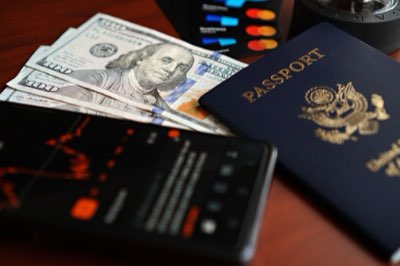
I remember sitting in a brightly lit airport terminal, clutching a thick envelope of cash and feeling incredibly nervous about losing it or getting cheated on the exchange rate. It felt like a heavy weight in my pocket that I didn't want to carry.
As noted by the United Nations Interim Administration, the UNMIK Travel Document was issued to residents of Kosovo between 2000 and 2008.
Understanding the flow of local currency and exchange rates is essential for financial security.
You can save significant amounts by monitoring exchange rates and exchanging money when the rate is favorable, or by using specialized travel cards that allow you to withdraw only what you need from local ATMs.
This method reduces commission fees and minimizes the physical risk of carrying large amounts of cash.
- Monitor exchange rates through a reliable financial app. - Open a specialized travel debit card with low foreign transaction fees. - Withdraw smaller amounts of local currency at ATMs as needed. - Keep digital backups of your transaction history for tracking.
Using a travel card is often much more efficient than traditional cash exchanges. It allows you to manage your budget in real-time through an app, providing a clear view of your remaining funds.
Why does having a travel purpose change my spending?
I sat at a small cafe table, looking at a list of twenty different attractions I had written down. I realized that trying to do all of them was impossible, and I was going to end up exhausted and broke by the third day.
The purpose of your trip dictates your spending priorities. If you are on a sightseeing-heavy tour, your budget will naturally lean toward entrance fees and transportation. If your goal is relaxation, your budget will shift toward high-quality accommodation and dining.
When your purpose is clear, you can prevent unnecessary spending and focus your budget on the experiences you truly value. A person on a culinary tour shouldn't waste their entire budget on a luxury hotel if they would rather spend that money on Michelin-starred meals.
This type of preparation is not a rigid rule; it is a framework. It does not apply to those who prefer entirely unplanned, spontaneous adventures where the budget is secondary to the whim of the moment.

How do I balance preparation with spontaneity?
I looked at my packed suitcase and realized I had brought three different types of umbrellas, even though the forecast was mostly clear. I had over-prepared for every possible scenario, which made the actual packing process a nightmare.
The key to a successful trip is knowing when to stop searching for information. Excessive research can lead to decision fatigue, where you feel overwhelmed by the sheer number of options available online.
To maintain a healthy balance, follow these steps: 1. Set a hard budget limit for the entire trip. 2. Research the top three "must-do" activities in the destination. 3. Leave the rest of your itinerary open for local suggestions.
By setting boundaries, you create space for the unexpected. This allows you to enjoy the freedom of travel without the stress of exceeding your financial limits.
When I tried the steps in order, the second one is where I paused longest.
However, this does not apply in every situation.
You can avoid high fees by using travel cards designed for international use and withdrawing cash from local ATMs only as needed. This approach minimizes the commission lost during traditional currency exchanges.
Related


Comments 0